
Blog
Managing Personal Privacy & Unwanted Intrusions at Private Celebrations in Egypt

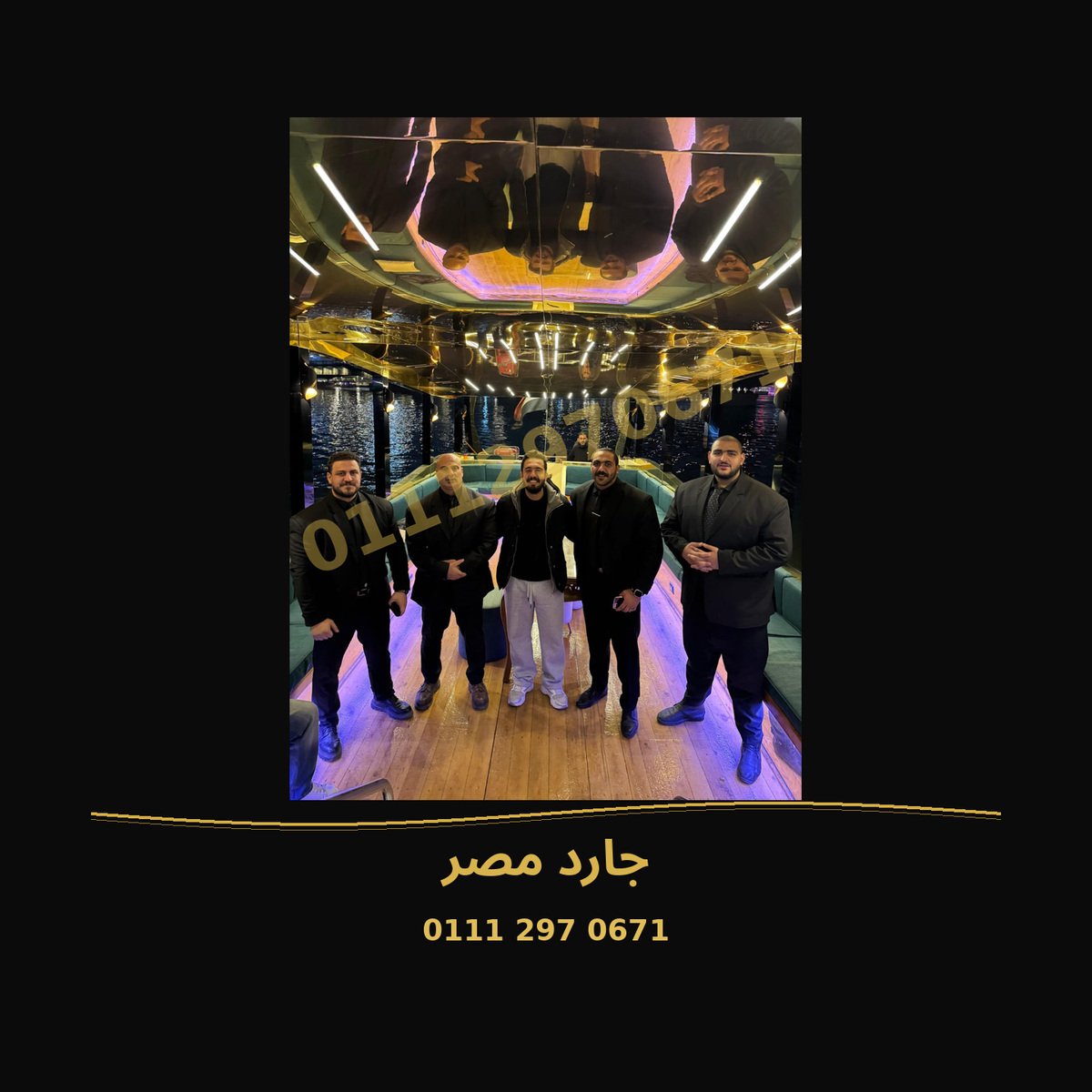
In an Age of Smartphones, Privacy is the Ultimate Luxury
Every guest at a modern celebration carries a camera, a livestream, and an audience. A private birthday in a Cairo villa, an engagement in a compound garden, a family milestone in a hotel suite: within minutes of the first toast, moments from the evening can be circulating among people who were never invited. For prominent families and public figures, that reality changes what it means to host a private event. The celebration is private by invitation; keeping it private in practice takes active management.
This is the gap a personal bodyguard fills at private celebrations. Not security against violence, though that readiness underlies the work, but privacy protection: managing who approaches, who photographs, and what leaves the room. For hosts who have had an intimate moment leak, or who simply refuse to spend their celebration wondering, a dedicated privacy-minded protection officer has become as standard a booking as the caterer.
This guide explains what privacy protection at Egyptian private celebrations actually involves: the risks worth planning for, the methods officers use on the night, and how to arrange coverage for your own event.
It is written for hosts and for the prominent guests themselves. The two often arrange protection together, but either can commission it: a family protecting its celebration, or a public figure who wants to attend a friend’s event without becoming its unintended headline.
Identifying Potential Privacy Risks at High-Profile Celebrations
Privacy risks at private events follow predictable patterns. The most common is casual intrusion: guests filming more than the family would like, photographing the children, capturing moments meant for the room and sharing them beyond it. Most of it is thoughtless rather than malicious, which does not make it welcome.
More pointed risks exist for genuinely prominent attendees. A public figure’s appearance at a family celebration has news value to strangers; an uninvited photographer at the perimeter, or an attendee with an agenda, can turn a private evening into public content. Then there is approach intrusion: the stranger who wants a word, a photo, a favor, a business pitch, directed at a guest who came to celebrate, not to be available.
Finally, there is information leakage of a quieter kind: staff and vendors sharing details of the home, the guests, or the arrangements afterward. A celebration concentrates your private world, your family, your home, your circle, in one observable place for one evening. Managing what is observed, and by whom, is the whole task.
None of this means a host should view their own guests with suspicion. The large majority of privacy problems are prevented by a visible professional standard and a few polite words, applied early. Planning simply refuses to leave the matter to luck, and it shows in how relaxed the evening feels.
What Privacy Protection Is Not
Two boundaries keep the service honest. First, it is not censorship of your own guests: friends photographing the celebration within your rules are part of the evening, and the protection works around them. Second, it is not confrontation as a first resort: the entire method is built on presence, positioning, and courtesy, with firmness held in reserve for the rare case that genuinely needs it. A celebration guarded by friction would defeat its own purpose.
Tactical Positioning: Blocking Unwanted Camera Angles & Photos
The working tools of privacy protection are positioning and presence. An experienced officer reads the geometry of a room: where the prominent guests sit, which angles expose them, where a person with a phone would need to stand to capture them. Then he occupies the geometry. A step to the left blocks a camera line; a position at the corner of the family table turns an exposed seat into a covered one.
When someone does film intrusively, the first tool is courtesy. A polite word, a quiet request to respect the family’s privacy, resolves most cases, most people simply do not realize they have crossed a line. Within the rules the hosts and venue have set for their event, the officer reinforces the boundary as firmly as the situation calls for, always aiming to keep the matter quiet and the evening undisturbed.
The couple’s or family’s own rules govern throughout. Some celebrations welcome photography; others designate camera-free moments or areas. The protection works to the standard the hosts set, no stricter, no looser, in step with the event’s own team.
Timing plays a role as well. The exposure peaks at predictable moments: the entrance, the cake, the first dance, the departure. An officer who knows the schedule pre-positions for each peak rather than reacting to it, which is why the schedule review is part of the pre-event briefing.
Privacy Before and After the Celebration
The event itself is only part of the exposure. Before the celebration, arrangements circulate: the venue, the date, the guest list passes through vendors and staff. After it, the evening’s photos and stories travel. A privacy-minded engagement covers the arc: discretion in the planning conversations, professional conduct on the night, and no tales afterward. The officer who protects your celebration does not become a source about it.
Hosts can reinforce the same arc on their side: share event details with vendors on a need-to-know basis, set the photography rule clearly in invitations or at the door, and designate one family member as the point of contact for privacy questions on the night. Small measures, but they multiply the effect of the professional coverage.
Establishing Private Buffer Zones Around Prominent Families
Positioning scales from sightlines to space. At events with genuinely prominent families, a privacy arrangement can include a quiet buffer: the family table positioned with its back to a wall rather than the room, the officer stationed between the family and the general floor, arrivals and cake moments managed so the family’s exposure is what they choose it to be.
The buffer extends to approaches. Guests who want to greet the family are welcomed through; the persistent stranger, the uninvited networker, the attendee who will not take a polite hint, is managed away with social grace. The family experiences a warm evening surrounded by their guests; the filtering underneath stays invisible.
Buffer zones matter most at the evening’s thresholds: the entrance, where outside and inside meet; the car park at departure, when guests are tired and exposed; and any private rooms the family uses through the night. These are the points where privacy is easiest to lose and where a stationed professional is worth most.
For families with children at the celebration, the buffer takes on its most important form: the children’s movements through the event, to the play area, the restroom corridor, the garden, stay within a watchful adult’s awareness all evening, without the children ever feeling watched.
Discretion, Non-Disclosure & Dignified Presence
Privacy protection only works if the protector is himself private. Discretion is the foundation of the engagement: your guest list, your home, your family, and your arrangements are held in confidence, before, during, and after the event. The officer’s presence on the night matches the occasion: formal dress coordinated with you in advance, polished manners, and a bearing that belongs at a celebration.
Client data, movements, work and private arrangements are treated with complete confidentiality. What is certain without any paperwork is the professional norm: a private event’s details belong to the family that hosted it.
Dignity is the other half of presence. Privacy protection done badly is conspicuous, a heavy-handed guard swatting at phones would ruin the very atmosphere it was hired to protect. Done well, it reads as part of the event’s polish: an attentive professional who happens to be exactly where he needs to be, every time.
Planning Privacy Protection for Your Next Event
Arranging privacy protection starts with your celebration: the date and venue, who needs coverage, the event’s photography rules, and any particular concerns, a public-profile guest, a past leak, a wish for a strictly camera-free evening. From that, an arrangement is proposed and confirmed with you: a single officer for the family, or a small detail covering the thresholds and the floor together.
Lead time helps, particularly in peak celebration seasons, so confirm current availability as soon as your date is set, particularly for weekend dates. A proper briefing covers the venue layout, the photography rules, the faces the officer should recognize, and the boundaries you want kept, the preparation that makes the night itself feel effortless.
Every arrangement is documented before the event: who is covered, the photography rules, the schedule, and the points of contact on both sides, so the celebration itself needs no discussion of any of it. You set the privacy standard once, in the briefing; from that point the evening simply runs to it, while you attend to your guests.
Contact us with your event date, and we will propose a privacy protection arrangement for your celebration, or browse our services for the full range of personal protection in Egypt. Your celebration should live in your guests’ memories, and nowhere else. One conversation with your date and venue is all it takes to begin.
For dedicated professional support, see our dedicated private events & vip guest personal protection, and you may also find our guide on practical travel security and protection advice useful.
Frequently Asked Questions
Can a bodyguard prevent guests from taking unauthorized photos of me?
Officers can position themselves to block invasive camera lines and politely ask attendees to respect your privacy, working within the photography rules you and your venue set for the event.
How do officers handle disruptive attendees?
The working standard for private events is verbal de-escalation and calm positioning, guiding a disruptive individual away while aiming to avoid any scene. You can discuss the specifics when arranging your booking.
Can we request confidentiality terms for our event?
Client data, movements, work and private arrangements are treated with complete confidentiality.